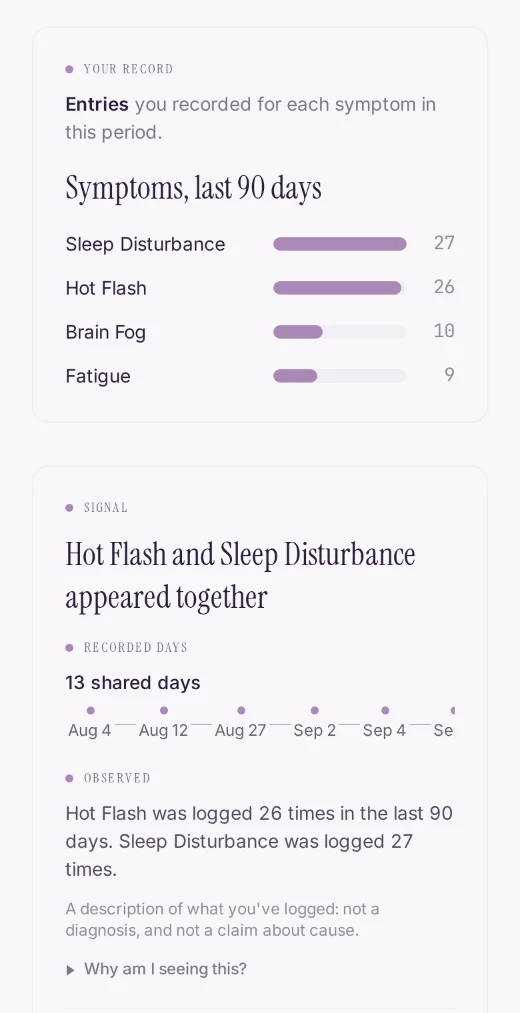
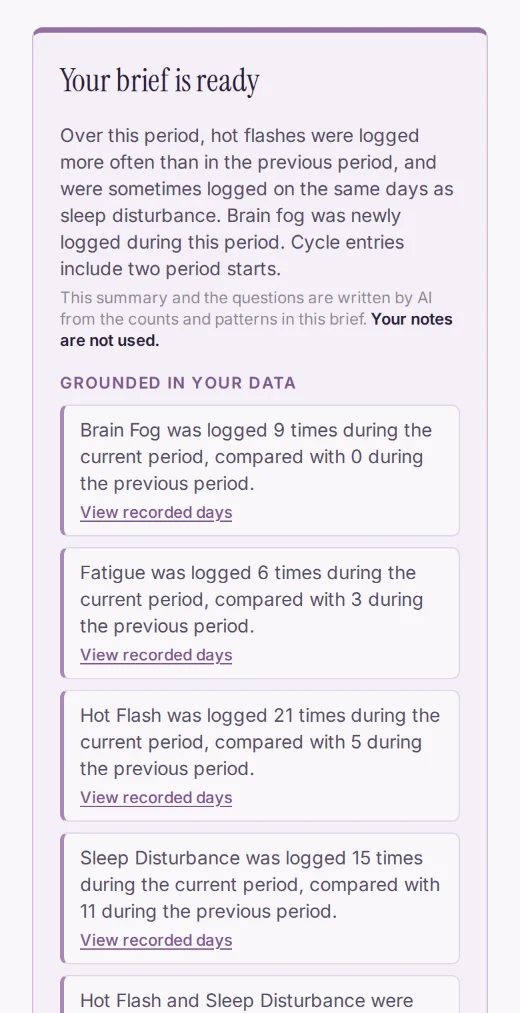
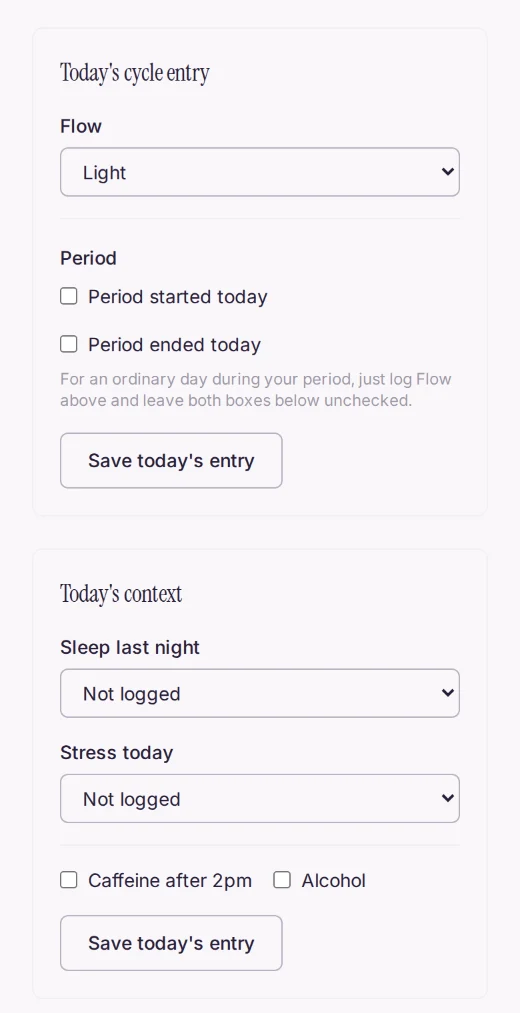
Log symptoms and your cycle in under a minute. See the patterns in your own record, and bring an EMBR BRIEF to your doctor: a structured summary with questions to ask.症状と周期の記録は1分足らず。EMBRはあなた自身の記録からパターンを示し、EMBR BRIEF(構造化された要約と、医師に尋ねたい質問)を用意します。
A structured record of your own experience. Not a diagnosis.あなた自身の経験を構造化した記録です。診断ではありません。
For many women, perimenopause arrives gradually, with no clear way to track what is changing.多くの女性にとって、更年期・周閉経期は少しずつ訪れます。何が変わっているのかを記録する明確な方法がないまま。
EMBR turns what you log into a record you can review, understand and bring to your doctor. It does not predict, diagnose or name causes.EMBRは、あなたが記録した内容を、あとで振り返り、理解し、医師との会話に持っていける記録にします。予測や診断をしたり、原因を特定したりすることはありません。
An appointment captures one moment. Symptoms, treatments and changes unfold over months and years. EMBR builds a structured record over time, so your evidence does not start on the day of your appointment.短い診察がとらえるのは、ある一瞬だけです。症状や治療、健康の変化は、数週間、数か月、数年をかけて展開していきます。EMBRは時間をかけて構造化された記録を積み重ねる手助けをします。そのため、医療の場に持っていくエビデンスは、診察当日から始まるものではなくなります。
Illustrative example. Your Timeline shows symptoms, cycle days and treatments in date order.例示です。タイムラインでは、症状、周期、治療を日付順に確認できます。
An EMBR BRIEF summarises your own record for your clinician, as a PDF.EMBR BRIEFは、あなた自身の記録をまとめた、医療者に伝わる要約です。PDFとしてダウンロードできます。
How it is written. EMBR calculates your patterns first. AI then receives only summary counts and those patterns, and puts them into plain words and discussion points. It does not diagnose, find patterns of its own or recommend treatment.EMBR BRIEFの作られ方。EMBRはまずあなたのパターンを算出します。そのうえでAIは、集計された数値と算出済みのパターンのみを受け取り、わかりやすい文章と話し合いのポイントにまとめます。AIが診断をしたり、独自にパターンを見つけたり、治療を提案したりすることはありません。


Screens from the EMBR app, shown with a test account and sample data.EMBRアプリの実際の画面です。テスト用アカウントとサンプルデータを表示しています。
Export your data or delete your account at any time. Employers never receive an individual’s health record. EMBR does not sell health data or use it for advertising.データはいつでもエクスポートでき、アカウントはいつでも削除できます。雇用主が個人の健康記録を受け取ることはありません。EMBRが健康データを販売したり、広告に利用したりすることはありません。
EMBR keeps four things apart: what research has established, what is still emerging, what EMBR does with your record, and where the record stops.EMBRは4つのことを区別しています。研究で確立されていること、まだ研究が進んでいること、EMBRがあなたの記録で行うこと、そして記録の役割が終わるところです。
Evidence based guidance for navigating the menopause transition: common symptoms, what to record, and what to discuss with your healthcare professional.閉経移行期を過ごすための、エビデンスに基づくガイド。よくある症状、記録しておくとよいこと、医療専門職と話し合いたいことをまとめています。
Information, not diagnosis. These resources help you understand the menopause transition and prepare for healthcare conversations. They do not diagnose conditions or replace medical advice.情報であり、診断ではありません。これらのリソースは、閉経移行期を理解し、医療の場での会話に備えるためのものです。病気を診断したり、医学的助言に代わったりするものではありません。
A concise introduction to the menopause transition.閉経移行期についての簡潔な紹介です。
Frequently asked questionsよくある質問Our flagship guide to working through the menopause transition.閉経移行期と仕事についての、EMBRの中心となるガイドです。
Read about the guideガイドについてThe menopause transition can affect many aspects of physical and emotional wellbeing. Understanding what you’re experiencing can help you document it and have a more informed conversation about your care. Tap a symptom to learn more.閉経移行期は、心身のさまざまな面に影響することがあります。いま経験していることを理解すると、記録しやすくなり、ケアについてより十分な情報に基づいて話し合えるようになります。タップすると詳細が表示されます。
Answers to the questions women ask most about the menopause transition, symptom tracking, and EMBR.閉経移行期、症状の記録、EMBRについて、よく寄せられる質問への回答です。
Healthcare is built around moments. A consultation, a test, a prescription, a follow up.医療は「瞬間」を中心に組み立てられています。診察、検査、処方、再診。
But many health experiences unfold between those moments. Symptoms change over weeks and months. Patterns are difficult to remember. Important context is scattered across appointments, notes, apps and memory. By the time a woman sits down with her doctor, much of the story may be missing.けれど、健康にまつわる経験の多くは、その瞬間と瞬間のあいだで起きています。症状は数週間、数か月かけて変わり、その流れを思い出すのは難しいものです。大切な背景は、診察、メモ、アプリ、記憶のあちこちに散らばっています。医師の前に座るころには、話の多くが抜け落ちていることもあります。
EMBR is building the evidence layer between those moments. We help women build a structured, longitudinal record of their health that they control, can understand over time, and can bring into healthcare conversations. We are starting with the menopause transition.EMBRは、その瞬間と瞬間のあいだをつなぐエビデンスの基盤を作っています。女性が自分で管理し、時間をかけて理解でき、医療の場での会話に持っていける、構造化された長期的な健康の記録を作れるようにします。まずは閉経移行期から始めます。
Perimenopause and menopause are a particularly clear example of the longitudinal evidence gap. Symptoms can change from week to week. Menstrual cycles can become less predictable. Sleep, mood, cognition, energy and physical symptoms can fluctuate over time. Yet the clinical conversation often happens in a single appointment, based largely on what a patient can remember and describe in the room.周閉経期と更年期は、長期的なエビデンスが欠けている状況をとてもはっきり示しています。症状は週ごとに変わり、月経周期は予測しにくくなり、睡眠、気分、認知、エネルギー、身体の症状も時間とともに揺れ動きます。それでも医療の場での会話は、多くの場合一度の診察で、その場で思い出して説明できることを中心に行われます。
EMBR gives that experience a record. Track what you experience. See how it changes over time. Prepare a concise summary for your healthcare professional.EMBRは、その経験を記録にします。経験したことを記録し、時間とともにどう変わるかを確認し、医療専門職に向けた簡潔な要約を準備します。
EMBR does not diagnose you or determine what is causing your symptoms. It helps preserve the evidence of what you have experienced so that it can become part of a better informed conversation.EMBRがあなたを診断したり、症状の原因を判断したりすることはありません。経験したことを記録として残し、より十分な情報に基づく会話につなげるためのものです。
There are education platforms that explain the menopause transition. There are trackers that collect individual entries. There are services that connect patients with clinicians. EMBR is focused on the layer between experience and care: the record.閉経移行期を解説する教育プラットフォームがあります。日々の記録を集めるトラッカーがあります。患者と医療者をつなぐサービスがあります。EMBRが取り組むのは、経験とケアのあいだにある層、つまり記録です。
Not another feed to scroll. Not another streak to maintain. Not another appointment that starts from zero. A longitudinal record that grows with you and remains under your control.スクロールするフィードでも、続けることを求められる連続記録でもありません。ゼロから始まる診察でもありません。あなたとともに積み重なり、あなたが管理し続ける長期的な記録です。
EMBR describes. Your clinician interprets.EMBRは記録を示し、解釈するのは医療者です。
EMBR was founded by Tiyi Ayeva after years of working across luxury, strategy, finance and social impact, and seeing how difficult it could be for women to make sense of changes in their health while continuing to navigate demanding professional and personal lives. EMBR began with a simple question: what if women had a clearer record of what they were experiencing before they walked into the consultation room?EMBRは、ラグジュアリー、戦略、金融、社会的インパクトの分野で長く働く中で、女性が仕事や私生活の忙しさの中で健康の変化を理解するのがいかに難しいかを見てきたTiyi Ayevaが創業しました。始まりは、ひとつのシンプルな問いでした。診察室に入る前に、女性が自分の経験をもっと明確に記録できていたら、どうだろうか。
Every woman should be able to carry a structured, longitudinal record of her health into every healthcare conversation.すべての女性が、自分の健康についての構造化された長期的な記録を、あらゆる医療の場に持っていけるように。
Menopause is where we begin. The underlying problem is much larger: healthcare has limited visibility into what happens between clinical encounters. We believe a patient’s own longitudinal record can become an important part of that missing context.更年期は出発点です。根本にある課題はもっと大きく、医療は診察と診察のあいだに起きていることをほとんど見ることができません。患者自身の長期的な記録が、その欠けている背景を補う大切な一部になりうると、私たちは考えています。
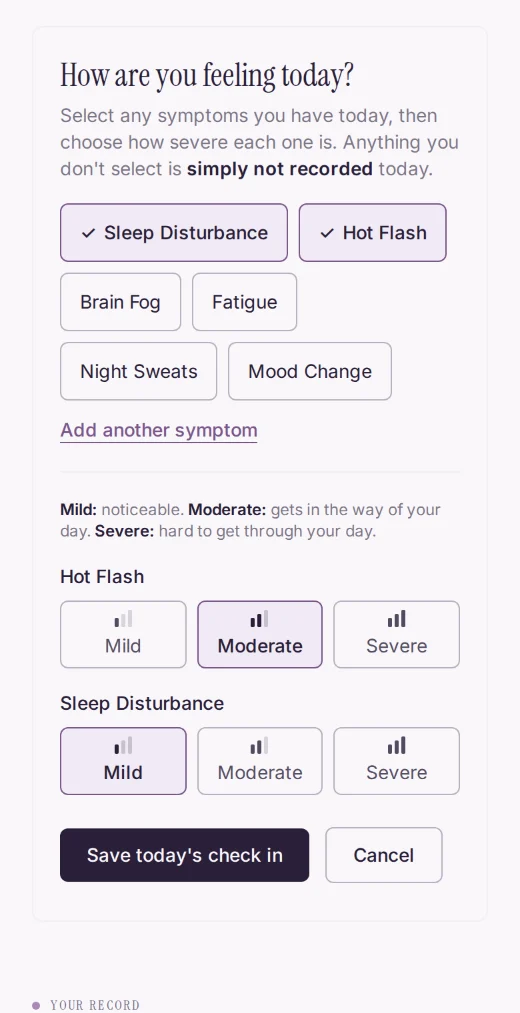
Perimenopause often coincides with peak career responsibility. EMBR gives organisations a structured way to help.周閉経期は、キャリア上の責任が最も重い時期と重なることが多くあります。EMBRは、組織が体系的に支援するための仕組みを提供します。
Enquiries, partnerships, media and research. Email us or use the form below.一般的なお問い合わせ、パートナーシップ、取材依頼、コラボレーションについて。直接ご連絡いただくか、以下のフォームをご利用ください。
Your symptoms deserve structure. Your appointments deserve evidence.症状には構造を。診察にはエビデンスを。
Not a diagnosis. Not medical advice. A clearer record for you and your healthcare conversations.診断ではありません。医学的助言でもありません。あなたと、医療者との対話のための、より明確な記録です。